
Memory Kits
All About Cognitive Care Kits for Adults Living with Memory Loss
What are Cognitive Care Kits?
Cognitive care kits are curated sets of materials to support people experiencing cognitive changes, such as dementia, Alzheimer’s, memory loss, or brain injury, as well as their caregivers.
These kits are designed to stimulate the mind, encourage conversation, and support meaningful engagement. They can be used at home, in care facilities, or during caregiver visits.
Memory loss and confusion are common symptoms, and a recalled moment from the past can be truly special. In addition to these kits, familiar photographs, music and keepsakes can help spark memories and offer a way for caregivers and loved ones to connect and communicate.
In summary, the purpose of cognitive care kits is to: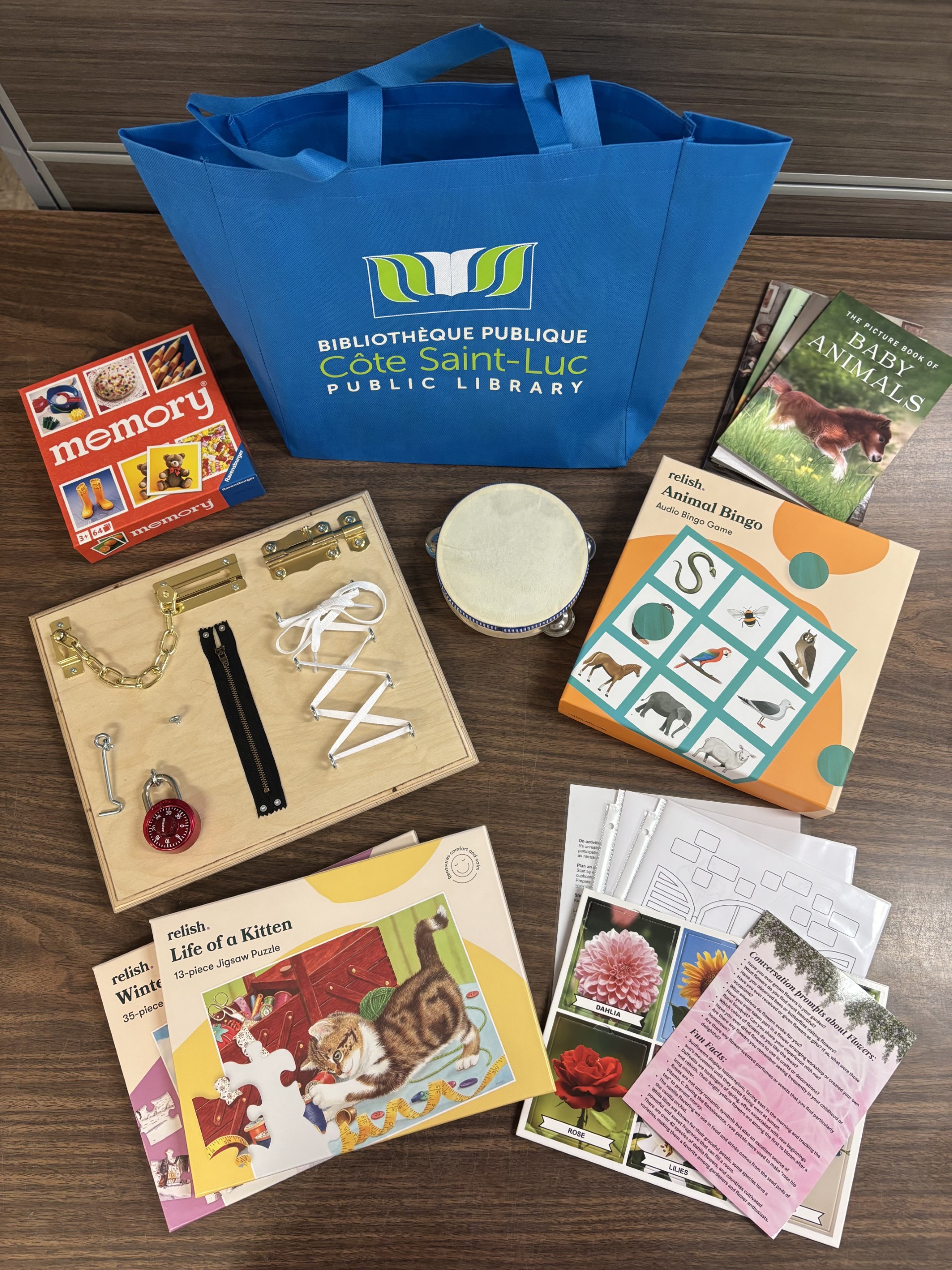
- Support memory stimulation and cognitive engagement.
- Encourage social interaction between caregivers and care recipients.
- Reduce anxiety through familiar or calming activities.
- Promote dignity and meaningful experiences for individuals with cognitive decline.
- Provide caregivers with practical, ready-to-use activities.
Who do they help?
- Individuals living with dementia or Alzheimer’s.
- People with cognitive impairments or recovering from stroke/brain injury.
- Caregivers seeking structured, supportive activities.
- Seniors experiencing mild cognitive decline.
What is in a Cognitive Care Kit?
Each kit comes in a convenient, easy-to-carry library bag and includes a variety of items and materials for engaging activities. While every kit is different, some items may appear in multiple kits.
Each kit contains the following:
- Activities (puzzles, simple games).
- Musical Instruments (instrument, music activities).
- Visual aids (photo cards, memory cards, picture books for adults).
- Tools for caregivers (guides, dementia-friendly communication tips, resources).
- Hands-on activities (coloured pencils, colouring pages, sorting activities, matching games).
Requesting a Kit
There are 5 kits available and each of them is numbered. You can request a kit at the Reference Desk and borrow it for up to 4 weeks. When returning a kit, please check that all items are accounted for. A checklist is included in the bag. Return the kit to the Reference or Circulation desk, please do not place them in the return chutes.
Tips for Success
Here are some helpful suggestions to make the most of your experience:
- Minimize distractions. Turn off background noise like the TV or radio to help create a calm environment.
- Go at their pace. Take your time and let the person with dementia lead the activity.
- Break tasks into smaller steps. If something feels overwhelming, simplify it into manageable parts.
- Respect individual needs. Not everyone wants to be active all the time. Some people enjoy engaging activities, while others may prefer quiet moments to rest or simply look out the window.
- Keep it short and sweet. New experiences can be tiring. Short interactions (5–15 minutes) spaced throughout the day may be more effective.
- Time activities thoughtfully. More stimulating activities often work best in the morning or early afternoon, while quieter ones are ideal for evenings.
- Consider support needs. Some individuals may enjoy working independently, while others benefit from gentle guidance or encouragement.
- Stay flexible. Dementia affects everyone differently. If an activity isn’t working, feel free to switch it up, take a break, or try again later.
Most importantly: Enjoy the moment. Focus on the experience, not the result. The goal of using a the kits is to connect, share, and find joy in the activity.
Inspired by an initiative launched by the Pointe-Claire Public Library, this project is supported by the Bibliothèques des banlieues de l’Île de Montréal — a dynamic network of libraries from Montreal’s demerged cities that collaborates to enrich public services, foster innovation, and meet the specific needs of their communities.